

The new Heat Protection Ordinance came into effect on 01.01.2026. The background to this is the increasing health burdens caused by ever hotter summer days and heatwaves, as well as intense UV radiation. High temperatures can lead to circulatory problems, overheating, or heatstroke. At the same time, high UV exposure increases the risk of skin damage, eye damage, and skin cancer. The ordinance supplements existing employee protection regulations with the topic of heat protection and governs what measures employers must take in the future for outdoor work.
Who is affected
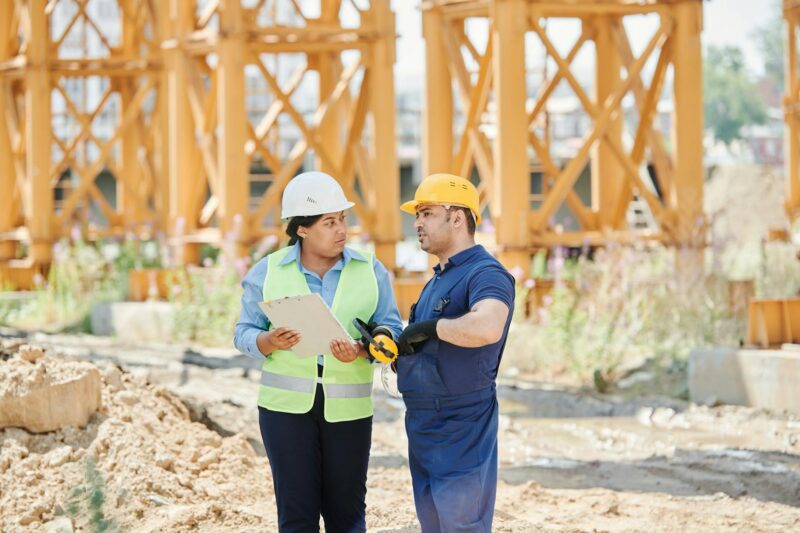
The Heat Protection Ordinance applies to employees who work outdoors, i.e. in outdoor workplaces, on construction sites, or at external workplaces within the meaning of the General Workplaces Act (ASchG). It is therefore particularly relevant for companies in the areas of construction, delivery services, security services, waste management, festival operations, and landscaping, among others.
Activities in enclosed workspaces are not covered. Also excluded are short-duration tasks, such as short trips to the vehicle. For light activities, this applies for up to 60 minutes per day.
What types of work are distinguished
The regulation distinguishes between the physical exertion of the activity. This distinction is important because the physical strain must be taken into account when assessing the risk.
- Light tasks include activities such as inspecting, fertilising, or watering.
- Medium-heavy work includes work with a pneumatic hammer, paving, hoeing, planting trees and shrubs, or harvesting fruit and vegetables.
- Heavy work, for example, involves shovelling, working with a sledgehammer, sawing, pushing or pulling heavily laden handcarts or wheelbarrows, breaking up cast iron pieces, or laying concrete slabs.
What is to be evaluated
Employers must assess whether employees are exposed to heat or UV radiation during their work. The outside temperature is not the only factor that matters. The following should be taken into account in particular:
- Intensity and duration of the load
- Physical exertion of activity
- Direct and indirect solar radiation
- additional heat sources such as heated surfaces or heat build-up
- Ground-level ozone and reflections
- Required clothing and protective equipment
- Age, health status and particular vulnerability of workers
If this assessment indicates that heat protection measures are necessary, these must also be implemented.
When heat protection measures are necessary
As soon as GeoSphere Austria issues a heat warning from level 2 (yellow) for the respective area of operation, employers are obliged to implement appropriate protective measures.
What measures are to be taken
The regulation names various measures that can be considered depending on the activity and the load.
- To avoid dangers For example, the start of the working day and working hours can be adjusted, additional breaks can be provided, or the intensity of work reduced.
- Technical Measures can eg be shading, fans or shower facilities.
- Organisational measures include, for example, shifting strenuous physical work to cooler times of the day, working in the shade, or changing tasks.
- Personal protective equipment particularly suitable clothing, UV-protective clothing, head and neck protection, sunglasses, sunscreen, and cooling clothing such as cooling vests or cooling towels. Drinking water or non-alcoholic beverages should also be provided.
The measures envisaged must be accessible to employees and the labour inspectorate in workplaces, on construction sites, and at external work locations – either electronically or in paper form.
Additional duties
In addition to the general measures, the regulation contains specific requirements for heat protection.
- Employees must be provided with sufficient drinking water or an alcohol-free beverage.
- Protective clothing in accordance with PPE V must be provided. Employers must also ensure that it is worn. The clothing must sufficiently cover the body, at least with a T-shirt and trousers reaching the knees.
- Living rooms in containers or similar facilities must not overheat. If the room temperature is above the ambient temperature, a cooling unit is otherwise required.
- Ambulance compartments must be equipped with a cooling facility. Mobile cooling units are also permitted. For ambulance compartments already in use, this obligation applies from 01.01.2027.
- Self-driving work equipment such as excavators, loaders, bulldozers, rollers, and lorries and cars must be adequately air-conditioned. This obligation does not immediately apply to equipment already in use, but alternative remedies must be provided.
Informing employees
Employees must be informed about the health risks of heat and UV radiation and trained accordingly for better heat protection. This includes, in particular:
- Potential health impacts
- Recognising heat-related illnesses
- Access to heat warnings and UV Index
- Meaning of operational protective measures
- Possibility of a voluntary examination under the Ordinance on Health Surveillance at Work
What makes sense now
Companies with outdoor activities should review their existing protective measures in good time and adapt them if necessary. In practice, it can be helpful to involve occupational physicians or safety specialists in the implementation of heat protection, even if it is not legally mandatory. It is also recommended to keep an eye on weather developments and heat warnings at the beginning of the working week in order to be prepared for possible measures. The AUVA (General Accident Insurance Institute) should also provide support in this regard.
Conclusion
With the new heat protection ordinance, the protective duties for outdoor work are becoming more specific. Employers must assess risks from heat and UV radiation, implement measures when warnings are issued, and inform their employees. Especially in sectors with regular outdoor operations, it is recommended to review existing procedures early on and adapt them to the new requirements.
Date: 04/05/2026
Sources: WKO, AUVA
Image: Canva AI